How to hit an overhead smash in tennis
Turn, point, cross-step. Then hit the serve.
See it, eight instants at a time.
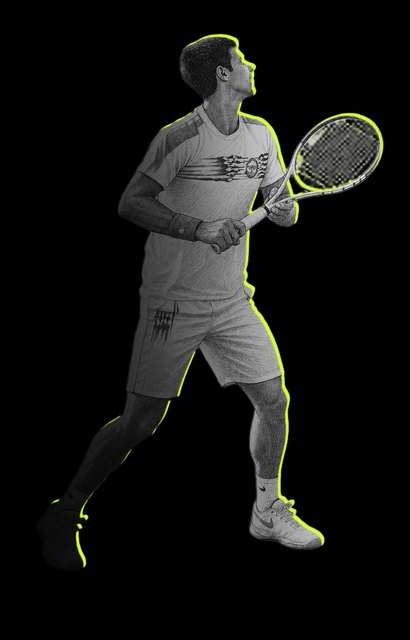
Every frame is traced from real match footage, so you see the shape of the stroke, not a drawing of an idea.
Key facts
- 1
Backpedalling to the lob is the single biggest cause of a missed smash, leaving you flat-footed, off balance and making contact behind the head.
- 2
The overhead uses the serve's throwing chain: legs, trunk, shoulder, arm and pronation, with a shorter swing.
- 3
The contact window is with the ball slightly in front of the hitting shoulder.
- 4
A common net-play drill volume is eight lob, smash and recover cycles.
Why it works
The overhead is the serve's throwing chain fired under a ball you didn't toss. The chain is the same: legs, trunk, shoulder, arm, pronation. The difference is that the ball is moving and so are you, so the swing is shorter and more controlled.
The whole shot is decided by whether your feet got you sideways with the ball slightly in front of the hitting shoulder. Turn immediately, point the off hand to track the ball, shuffle or cross-step back, then transfer forward and explode up.
When the lob is too deep to reach on your feet, the scissor kick trades a jump and a leg switch for the last metre. If you're facing the net when the ball arrives, you backpedalled.
The line to say on court“Turn, point, and let it drop in front of you.”
Drill: Lob and smash
15 min · with a partner- Have your partner lob short, to the service line. Do ten reps: turn and point before the ball peaks, then hit a three-quarter serve.
- Have your partner lob deeper. Do ten reps: cross-step back, keep the ball in front of your shoulder, then explode up.
- Run eight cycles: lob, smash, recover to the net and volley the next ball.
More drills like this: volley and net
Faults and fixes
Questions players ask
Why do I keep missing easy overheads?
Usually it's the feet, not the swing. Backpedalling leaves you flat-footed and off balance, with contact behind your head.
Should I let a high lob bounce before smashing it?
For a very high lob, especially with the sun behind it, let it bounce. The ball comes down slower, you can set up and you hit the serve you know.
Is an overhead the same as a serve?
It uses the same throwing chain, but the swing is shorter and more controlled because both the ball and you are moving.
What is a scissor kick overhead?
A jumping overhead for lobs too deep to reach on your feet. You jump and switch legs in the air to reach the last metre.
What this doesn't cover
There are no measured numbers behind this guide. No overhead has been tracked, so the comparison with the serve is by mechanism, not measurement. The full rules for when to let a lob bounce, by height, sun and wind, are a coach's call.
Sources
- USTA: overhead instruction
- Elliott (2006), British Journal of Sports Medicine: biomechanics and tennis, the throwing chain