Where to stand to return serve in tennis
Stand where the trade is right. Back buys time, in steals it.
See it, eight instants at a time.
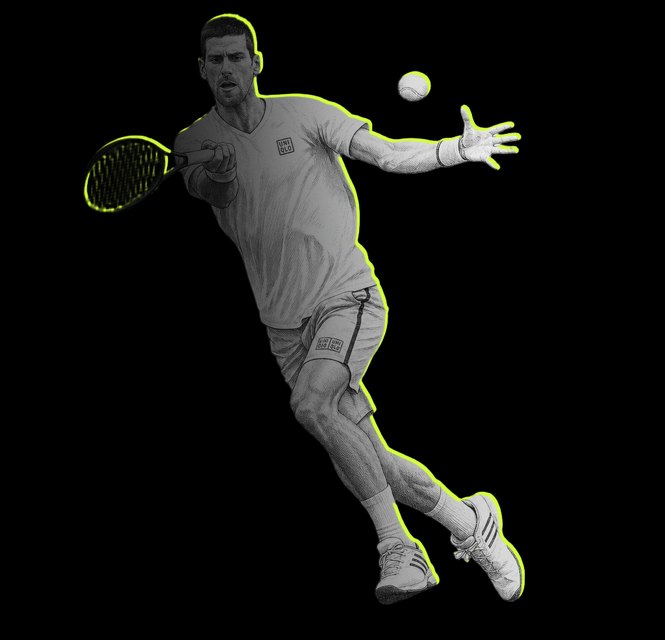
Every frame is traced from real match footage, so you see the shape of the stroke, not a drawing of an idea.
Key facts
- 1
A 200 km/h serve gives the returner about 333 milliseconds.
Farrow, The Conversation
- 2
Human reaction time has a floor of about 200 milliseconds, so the time you can buy by moving is small but real.
- 3
Standing one to two metres deeper adds tens of milliseconds of flight time, by the model's arithmetic.
- 4
Deep is the safer default on fast courts and against the biggest servers, and stepping in is the pressure play on a weak second serve.
Why it works
Your reaction time is fixed, so you buy time one of two ways. Stand further back and the ball takes longer to arrive, but it has more court to find. Step in and take it early and the server has less time, but you need cleaner timing and an earlier read.
Standing deep widens the fan of serves you have to cover. Stepping in compresses the angle the server can reach, but shrinks your own clock too. Good returners move between the two inside a single game to break the server's rhythm.
After the return, recover toward the bisector of your opponent's reply angles, not the centre mark. The reply angles moved with your return.
The line to say on court“Back buys time. In steals it. Nothing is free.”
Drill: First and second positioning
12 min · with a partner- Mark two spots: 1.5 m behind the baseline and half a metre inside it.
- Your partner mixes first and second serves at random. Start every point on the deep mark. Move to the inside mark only when the first serve misses.
- Return twenty serves. Score the returns that land past the service line.
More drills like this: return
Faults and fixes
Questions players ask
Should I stand back or step in to return serve?
Against a fast first serve, especially on a fast court, stand back and block. On a weak second serve, step in. The choice follows the serve, not your mood.
How much time do you have to return a serve?
At 200 km/h, about 333 milliseconds, against a reaction floor of about 200. Standing one to two metres deeper adds tens of milliseconds.
Why move between first and second serves?
Staying in one spot gives up the attack on the second serve. Moving in also changes the picture for the server and can break their rhythm.
Where do I recover after returning serve?
To the bisector of your opponent's possible replies, not the centre mark, then split step as they hit.
What this doesn't cover
The time gained per metre comes from a flight model with its own assumptions, not measured tracking data. There's no data here on where tour returners actually stand. The right position also depends on your hands, your read and the surface.
Sources
- Farrow, The Conversation
- ATP return leaderboard
- Ultimate Tennis Statistics